


Setting Things Right
Mennonite Bonesetters and Community Healing
For generations, Mennonite communities relied on local healers known as trajcht’moakes, a Low German term meaning “those who set things right.” Long before doctors and hospitals were readily available in rural Manitoba, these bonesetters provided essential health care for families facing injuries, accidents, and illness. They treated broken bones, dislocations, strained muscles, and painful joints, often travelling great distances to reach those in need. Their knowledge and skills were learned through observation, experience, and years of practical work, with skills often passed from one generation to the next.
In isolated farming communities, bonesetters occupied a place of deep respect and trust. A successful treatment could restore a farmer’s ability to work, help a child walk again, or bring relief to someone suffering chronic pain. Their reputation spread from neighbour to neighbour, and patients often returned repeatedly because of the confidence they placed in these healers’ hands.
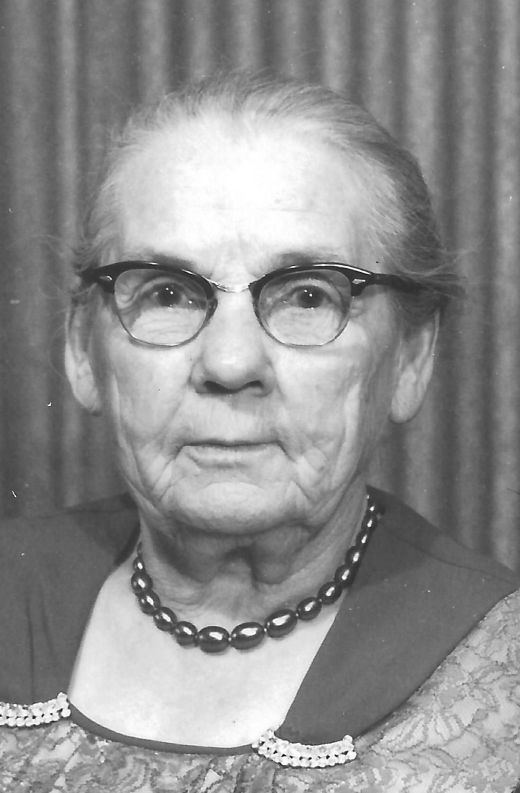
One of the most remarkable of these community healers was Gertrude Klassen (1892–1986), widely known as Tante Trutje or Klosis Trutje. Although respected as a chiropractor and bonesetter, her legacy extends far beyond physical healing. Klassen devoted her life to caring for vulnerable children, combining practical medical skills with extraordinary compassion. Over a span of more than forty years, she welcomed fifty-three children into her home. Some were newborns, others were seriously ill, and many came from difficult family circumstances.
Her first long-term patient was a nephew disabled by polio. Through dedicated care and treatment, she helped restore his mobility. As the years passed, her home became a refuge where children found stability, care, and opportunity. For many families, Gertrude Klassen provided not only healing hands but also a loving home when they needed it most.
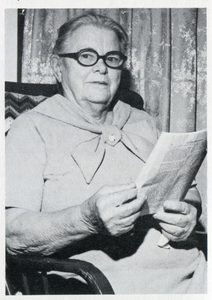
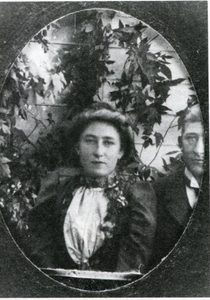
Another respected healer was Susanna Hiebert (1885–1949) of Heuboden, Manitoba. Known as both a midwife and bonesetter, Hiebert served families across cultural and religious backgrounds. Her training began under the guidance of her mother, but she also pursued medical knowledge independently through careful study of medical books. This combination of traditional practice and self-education made her a trusted caregiver within her community.
Hiebert became known not only for her skills but also for her generosity. She assisted with childbirth, treated injuries, and cared for the sick, often accepting little or no payment. Sundays’ earnings were frequently donated to missionary relief work. Her willingness to help regardless of a family’s financial circumstances reflected the values of service and compassion that characterized many Mennonite healers.
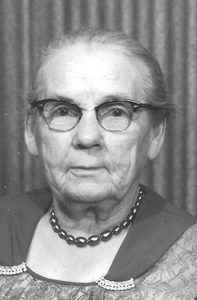
The healing tradition also lived on through Anna Giesbrecht Friesen (1885–1981), whose work connected communities across continents. Trained by her mother, Friesen practiced as a bonesetter, midwife, and healer first in the Soviet Union and later in Manitoba and British Columbia. Her knowledge extended beyond bone-setting to include deep muscle treatments and reflexology.
Friesen often served families living far from professional medical care. In many cases, she was the first person called when injuries occurred or when mothers approached childbirth. Her work demonstrates how women played a central role in maintaining health and well-being within Mennonite communities. Through decades of service, she preserved traditional healing knowledge while adapting it to new circumstances and new homes.
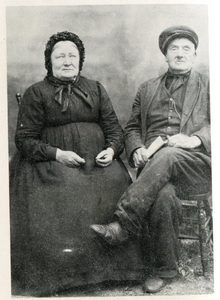
Perhaps no Mennonite bonesetter became more legendary than John Peters (1850–1927), better known as the “Wizard of Grunthal.” A self-taught chiropractor and bonesetter, Peters practiced in southeastern Manitoba for approximately thirty years. Though his methods were often unconventional, his reputation spread widely. People travelled from as far as eighty miles away seeking his help.
Peters was rough around the edges and frequently criticized by formally trained physicians. Yet his patients trusted him because they believed he produced results. Stories about his work quickly became part of local folklore. The most famous involved a young man suffering from relentless hiccups. According to community memory, Peters tied the man to a chair, loaded a rifle, and announced that he would have to shoot him. The shock was so great that the hiccups immediately stopped.
Whether embroidered over time or entirely accurate, the story captures the larger-than-life reputation that surrounded him.
Although Mennonite bonesetters practiced outside the world of modern medicine, they fulfilled an essential role in their communities. People like Gertrude Klassen, Susanna Hiebert, Anna Giesbrecht Friesen, and John Peters provided care when few other options existed. They healed broken bodies, comforted anxious families, and strengthened community bonds through service and compassion.
Today, their stories offer a window into a time when health care depended as much on trust, experience, and neighbourly care as it did on formal medical training. As trajcht’moakes, they truly helped “set things right,” leaving a legacy of healing that remains an important part of Mennonite history.
To learn more about the relationship between Mennonite history and health care, visit MHV’s exhibit, Mennonite Medicine: Cures and Curiosities, 1800-1950. Through artefacts, stories, and personal accounts, the exhibit explores the medical challenges, remedies, and innovations that shaped Mennonite life across generations.