


Mennonite Midwives: Women of Skill, Courage, and Compassion
In the early Mennonite settlements of Manitoba, childbirth often took place far from doctors, hospitals, and modern medical care. In these circumstances, midwives became essential figures in their communities. They delivered babies, cared for mothers, offered medical advice, and provided comfort during some of life’s most challenging moments.
A Vital Role in Pioneer Communities
For early Mennonite settlers, professional medical services were often unavailable. Roads were poor, distances were long, and physicians could be days away. Midwives filled this critical gap. Their knowledge was passed down through experience, family training, and occasionally formal instruction. They were trusted not only for their practical skills but also for their wisdom, discretion, and commitment to serving others.
These women often travelled in difficult weather, through darkness, snowstorms, and muddy roads, to reach families in need. Their work demanded courage, resilience, and a willingness to place the needs of others before their own comfort.
Katharina Born Thiessen: A Trailblazing Practitioner
Few women embodied this wide-ranging expertise like Katharina Born Thiessen (1842–1915). She trained in midwifery, chiropractic, and naturopathy in Germany before returning to Imperial Russia where she married Abraham Karl Thiessen in 1862. The family emigrated to Kansas in 1874 and settled near Winkler, Manitoba, in 1885.
Katharina quickly became a well-known healer, valued both for her medical knowledge and her fluency in Low German. Her large home included a pharmacy, an operating room, and space for overnight patients. She kept learning, too, studying in Cincinnati in the 1890s. Yet her credentials were not enough for everyone. Local physicians challenged her because she lacked a Canadian license. She paid a fine and carried on, eventually focusing on patent medicines until she retired in 1907. An apothecary bottle that belonged to her is displayed at the start of the Mennonite Medicine exhibit.
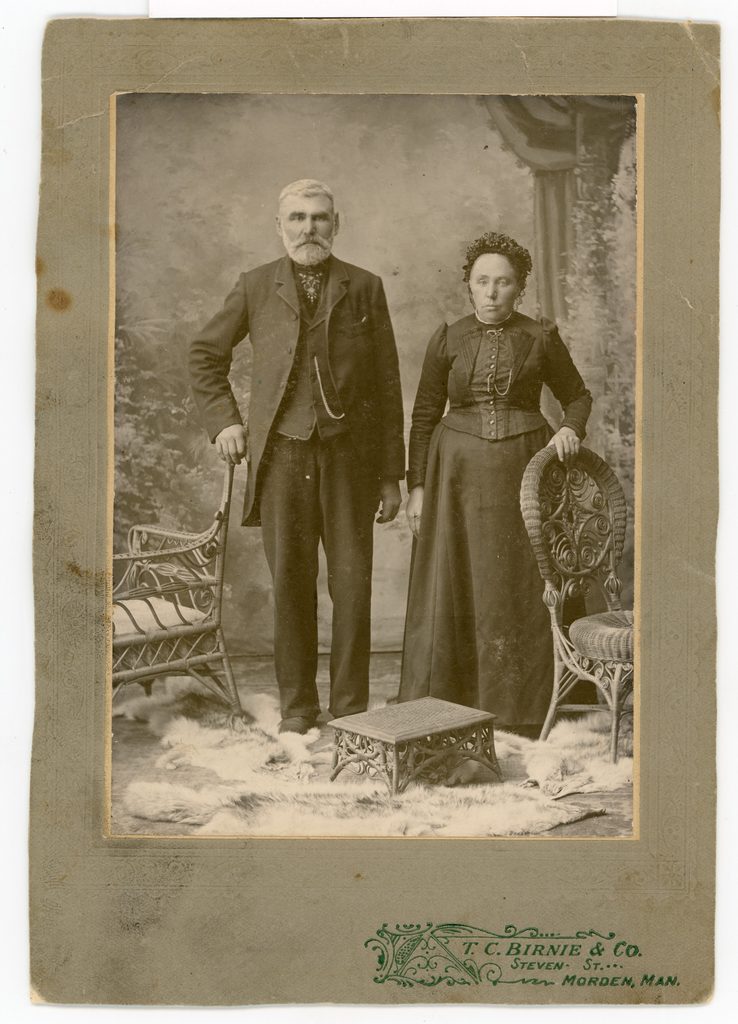
Katharina Born Thiessen with her husband Abraham.
Photo Credit: Mennonite Heritage Archives, Katharina Thiessen Fonds, Photo 579.5
Katherina Hiebert Hiebert: An Unflinching Advocate
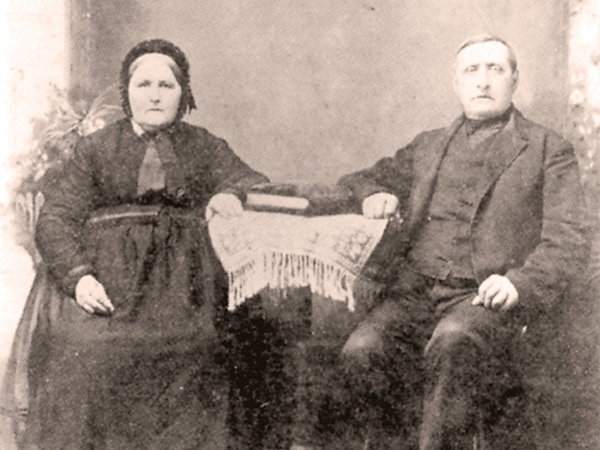
Katherina Hiebert Hiebert with her husband Jacob.
Photo Credit: Mennonite Heritage Archives, Mennonite Genealogy Inc. Photograph Collection, Photo 629.H.32.0.B
Katherina Hiebert Hiebert (1855–1916) of Schanzenburg, near Steinbach, was known as a determined and inquisitive midwife. Far from being satisfied with the knowledge she already possessed, she continually sought to improve her skills. She ordered medical books from Germany, expanding her understanding of health and childbirth well beyond the basic training available to most rural midwives of her day.
Katherina earned a reputation for speaking her mind and standing up for vulnerable women. She did not hesitate to confront men who mistreated their wives, believing that the well-being of mothers was inseparable from the health of their families. Her strong sense of justice made her respected and, at times, feared by those whose behaviour she challenged.
Neighbours remembered dramatic scenes that illustrated her dedication. Expectant fathers would arrive anxiously at her home seeking help, only to see her moments later racing down the road in her buggy. Sitting squarely in the middle of the seat to maintain balance as the buggy bounced over rough roads, she urged her grey horses onward toward another family in need. These stories capture both her determination and the urgency that often accompanied a midwife’s work.
Justina Loewen Bergen: A Legendary Healer
Another celebrated Mennonite midwife was Justina Loewen Bergen (1826–1905), widely known as “Dr. Bergensche.” She gained a reputation as one of the leading medical practitioners among Mennonites in both Imperial Russia and North America.
Justina received her training from her father, David Loewen, and quickly became renowned for her extraordinary commitment to serving others. Her reputation rested not only on her medical skill but also on her willingness to go wherever she was needed. One account described her dedication by saying that “no darkness was too great, no storm too violent, no road so impassable, no work or family affairs so demanding that she would not go to the bedside of some sick person to help.”
After immigrating to Mountain Lake, Minnesota, she continued serving communities throughout the Midwest. Her practice took her across vast distances, including journeys to Nebraska, Kansas, and Manitoba. During one visit to Manitoba, she helped strengthen the next generation of caregivers by training three Kleine Gemeinde midwives: Aganetha Barkman of Steinbach, Margaretha Loewen of Hochstadt, and Anna B. Toews of Blumenort.
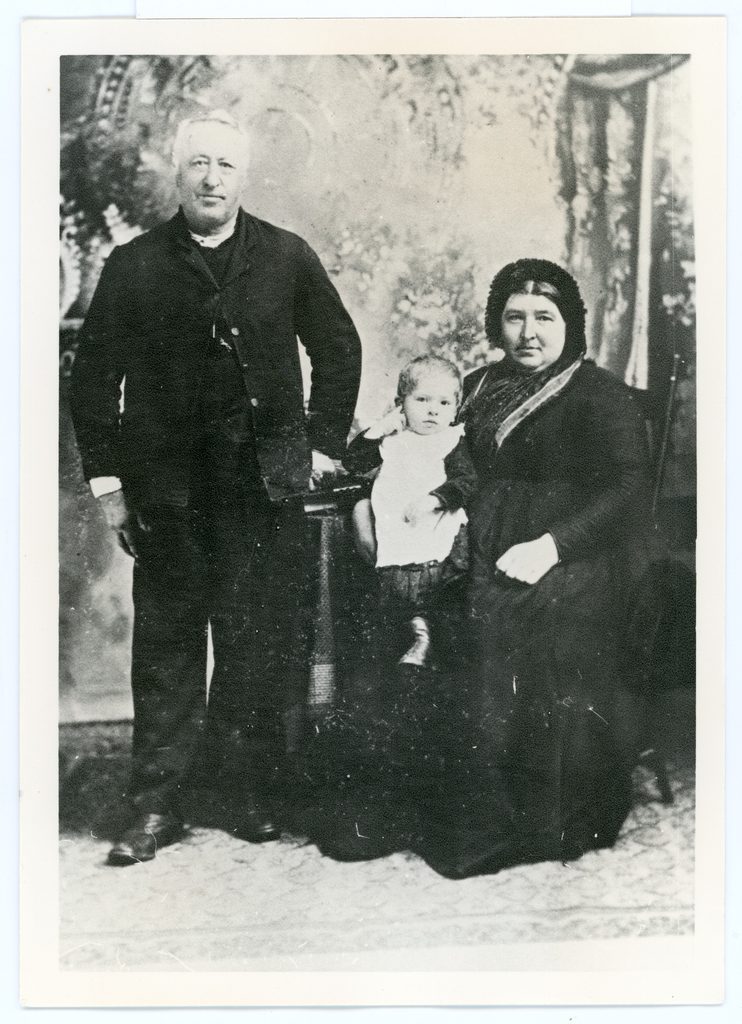
Justina Loewen Bergen with her second husband Gerhard Neufeld.
Photo Credit: Preservings, No. 18 (June 2001), Page 19
A Lasting Legacy
The stories reveal the profound impact that Mennonite midwives had on their communities. They were healers, educators, advocates, and neighbours. They travelled long distances, faced dangerous conditions, and dedicated themselves to the well-being of mothers, children, and families.
Their legacy extends far beyond the thousands of births they attended. They helped establish traditions of compassionate care, community service, and lifelong learning that continue to inspire today. In an era before modern hospitals became widely accessible, these remarkable women brought skill, courage, and hope to countless families, ensuring that new life could enter the world with care and dignity.
Visit the Exhibit
To learn more about the relationship between Mennonite history and health care, visit MHV’s exhibit, Mennonite Medicine: Cures and Curiosities, 1800-1950. Through artefacts, stories, and personal accounts, the exhibit explores the medical challenges, remedies, and innovations that shaped Mennonite life across generations.