

Mennonite Village Photography
Views from Manitoba 1890-1940
February 2024 - July 2024
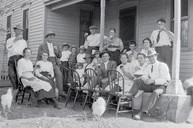
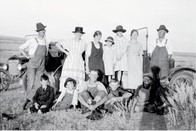
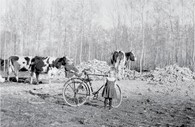
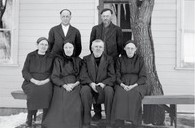
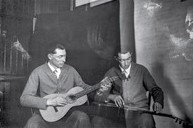
This exhibit featured a beautiful collection of never-before-seen photographs left behind by four Manitoba Mennonite photographers, Peter H. Klippenstein, Henry D. Fast, Peter G. Hamm, and Johann E. Funk, who lived and worked in the early twentieth century. The images were developed from glass and film negatives stored in institutional archives and family collections. After being scanned and given a new life in print, the photos provide a clear view into Mennonite life and early settlement in Manitoba.
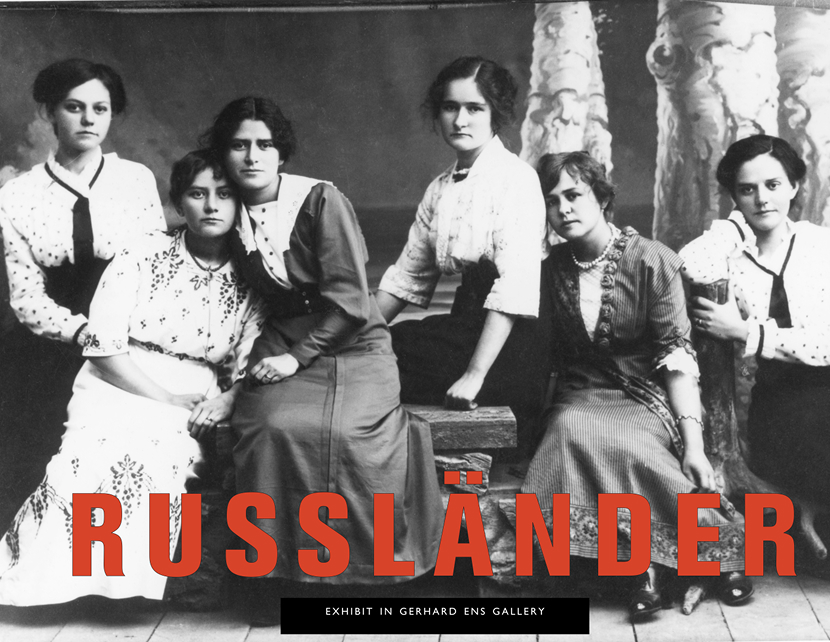
Professional photographers at this time usually specialized in taking posed portraits against painted backdrops in studios. The Mennonite photographers mimicked that style, but they also captured a much less artificial picture of what existed around them. All four captured an array of subjects both posed and candid, and the images reveal something of how they saw their worlds. Their images freeze-frame a distinctive and fleeting period in the history of Mennonite village life in western Canada.
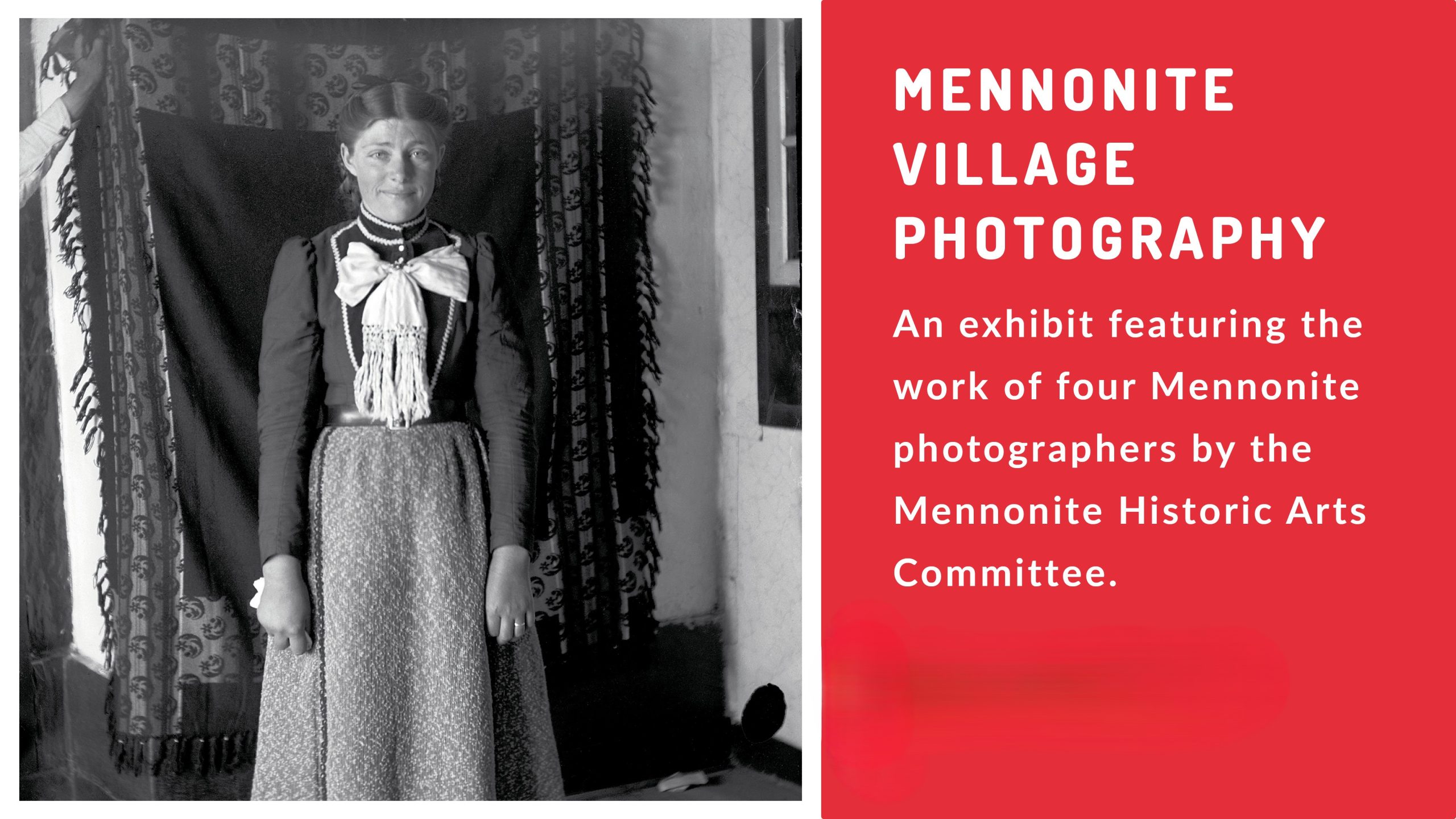
This exhibit featured a beautiful collection of never-before-seen photographs left behind by four Manitoba Mennonite photographers.
The images are from glass and film negatives stored in institutional archives and family collections. After being scanned and given a new life in print, the photos provide a clear view into Mennonite life and early settlement in Manitoba.
Professional photographers at this time usually specialized in taking posed portraits against painted backdrops in studios. The Mennonite photographers mimicked that style, but they also captured a much less artificial picture of what existed around them.
Though two of the photographers, Heinrich D. Fast and Johann E. Funk, were encouraged by their respective churches to give up their hobby in preparation for baptism and marriage, all four captured an array of subjects both posed and candid, and the images reveal something of how they saw their worlds.
Even if the men photographed for only a short window of time, their images freeze-frame a distinctive and fleeting period of time in the history of Mennonite village life in western Canada.

Peter G. Hamm
1883-1965
Neubergthal, Manitoba
Peter G. Hamm was born in Neubergthal, Manitoba. He married Gertrude Funk in 1910 and they had a family of five sons. Hamm is remembered as a quiet, curious man, with natural artistic and technical skills. He received his teaching certificate at Mennonite Collegiate Institute in Gretna, Manitoba, after which he worked as the village schoolteacher for several years. In 1918, he left teaching and began farming.
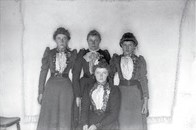
In addition to teaching and farming, Hamm had steady work into the 1930s as ‘the village photographer,’ producing formal portraits of residents posing in front of his recognizable painted backdrop. Photography was also a hobby and a form of self-expression for Hamm. For subjects he turned his attention to both the commonplace and the unique events and qualities of life in Neubergthal.
These images, left behind in a collection of 400 glass and film negatives, offer a unique perspective on early life in a Mennonite street village on Manitoba’s former Mennonite West Reserve.
Johann E. Funk
1878-1968
Schoenwiese, Manitoba
Johann E. Funk grew up in the village of Schoenwiese on the Mennonite East Reserve. He married Barbara Wiebe in 1903. The couple had one daughter before Barbara died of tuberculosis. Funk later married Helena Klippenstein, and the two had nine children.
J. E. Funk was an inventive and inquisitive man who enjoyed life and was always interested in new things. It is Funk’s brief occupation as area photographer, and the glass negatives he left behind, that have given him a lasting reputation. Funk’s photographs, which he intended to crop in the post-processing phase, show the unique landscapes, farmyards, and material culture of his subjects’ everyday lives between 1890 and 1904.
Funk ended his photography work soon after his first marriage. His grandchildren recall tales of a church minister harassing Funk about his hobby, reminding him of the Biblical injunction against producing ‘graven images.’ It was perhaps his frugality and practicality that led him to repurpose a number of his negatives as windows in his chicken coop.
Heinrich D. Fast
1894-1978
Gruenfeld, Manitoba
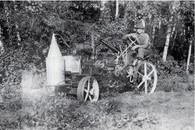
Heinrich (Henry) D. Fast was born in Gruenfeld (later called Kleefeld) on the Mennonite East Reserve. H. D. Fast grew up in a household that celebrated innovation and invention. The family business, H. L. Fast & Sons, was especially renowned for manufacturing self-propelled mowers and Manitoba’s first ditch-digging machine.
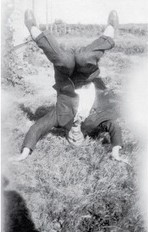
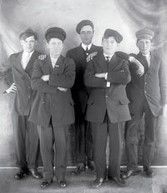
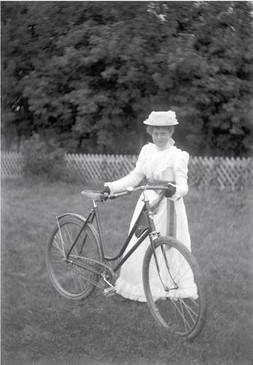
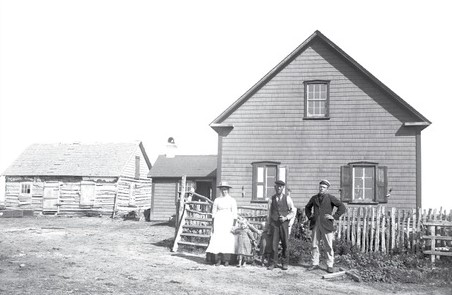
Henry D. Fast began photography as a young man and used a medium format Kodak Box camera from 1909. Many of the images in his collection show that blacksmithing and mechanics were central to his daily life. Fast’s collection also includes family and individual portraits, community gatherings, the spontaneous play of youth, and a certain degree of experimentation, featuring some unique and intentional double exposure shots.
Fast was encouraged by the church to give up photography when he married Helena Schellenberg in 1918. Though he obliged, he passed along the camera to his bachelor brother, Jake D. Fast.
Peter H. Klippenstein
1878-1960
Altbergthal, Manitoba
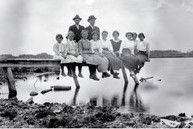
Peter H. Klippenstein was a farmer, woodworker, and avid photographer who lived most of his life in the creek-side village of Altbergthal on the Mennonite West Reserve. He married Maria Dyck in 1900. The couple had thirteen children, though only ten lived into adulthood. Klippenstein left behind hundreds of film negative and glass negatives.
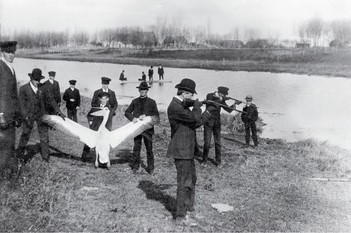
Buffalo Creek appears often in Klippenstein’s photographs, a topography which makes them stand out among the other images in this exhibit. Altbergthal is situated along the eastern bank of Buffalo Creek, one of very few bodies of water on the West Reserve. The creek ensured the distinctiveness of early Mennonite village life in Altbergthal: opportunities for boating, ice-skating, hockey, sledding, trapping, and hunting waterfowl were close at hand.
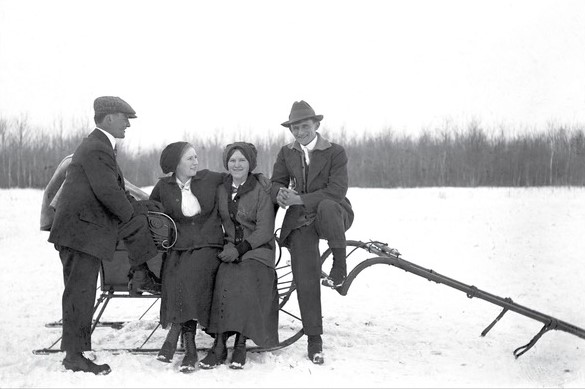
In addition to formal portraits in front of a painted backdrop, Klippenstein’s photos document many candid and playful scenes, wherein the summer and winter activities that took place on Buffalo Creek are the primary focus.