

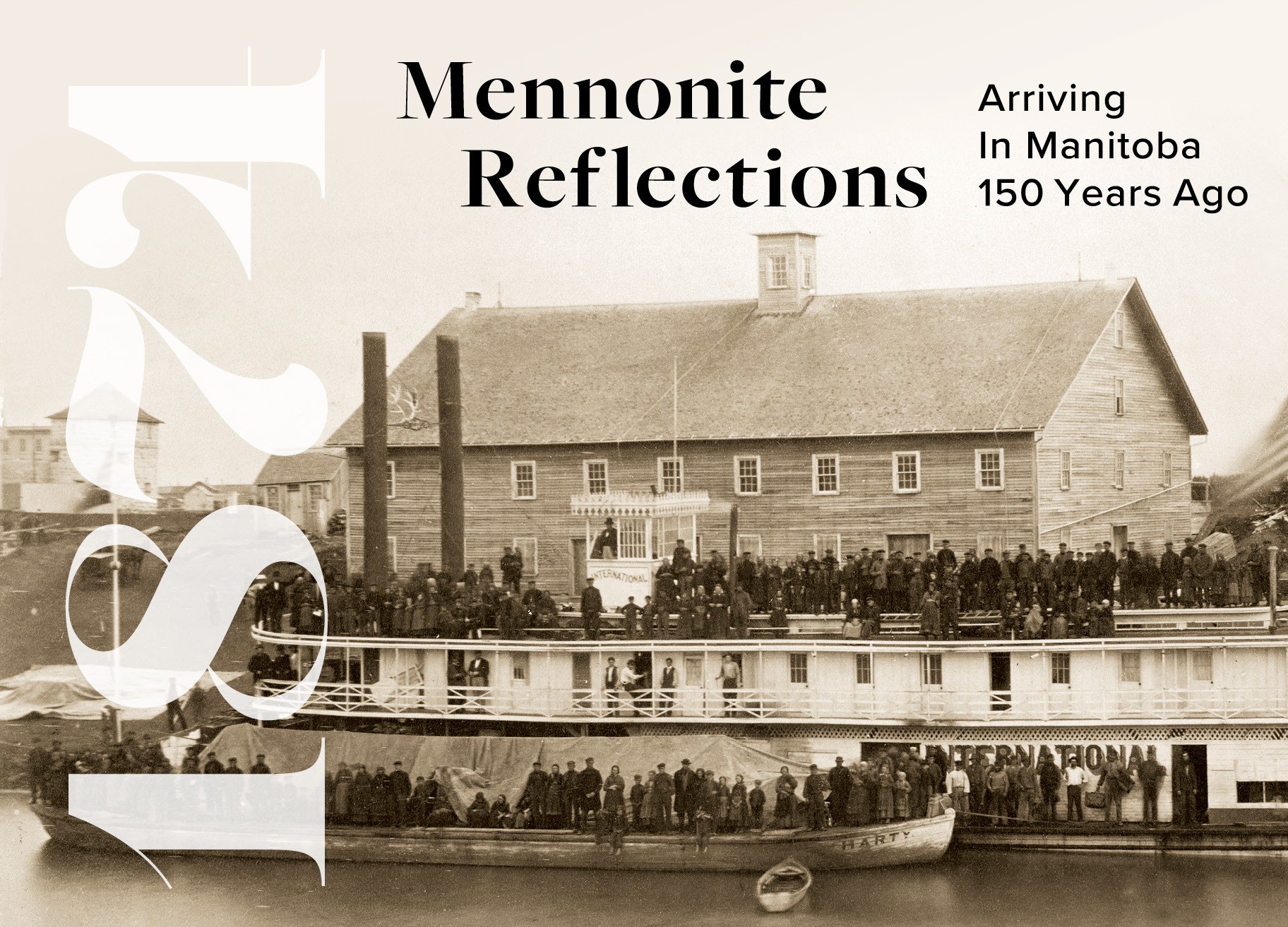
Mennonite Reflections
Arriving in Manitoba 150 Years Ago
August 2024 - March 2026
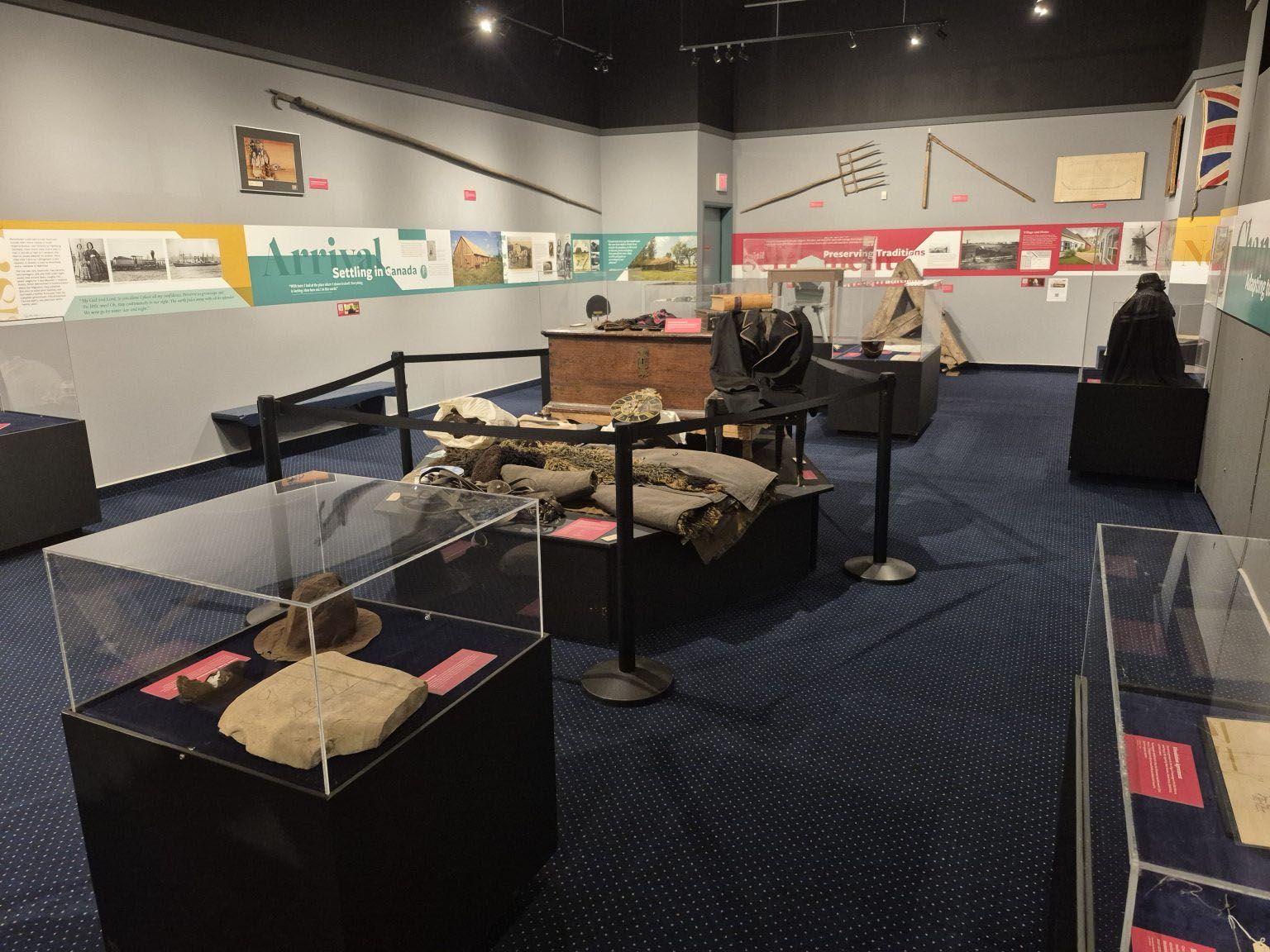
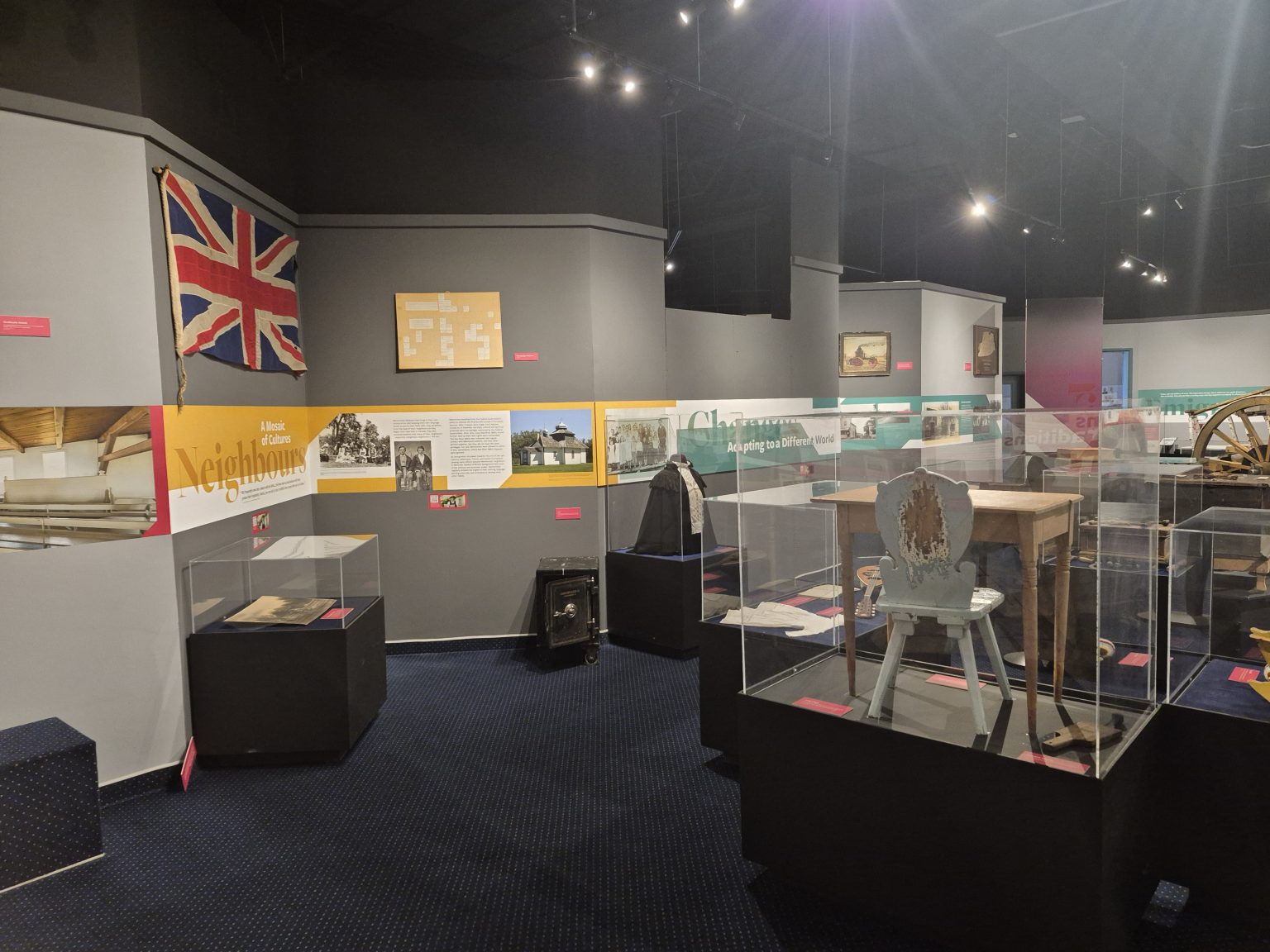
This exhibit explored the 1870s migration of Mennonites from Imperial Russia to Manitoba as they sought to preserve their faith and way of life. In the 1860s, reforms in Imperial Russia increasingly demanded assimilation, raising concerns about the loss of military exemption and control over education. In response, traditionalist Mennonite groups began searching for a new homeland. Between 1874 and 1880, approximately 7,000 Mennonites relocated to Manitoba.
The exhibit traced the world they left behind in Imperial Russia, the arduous 15,000-kilometre journey to Manitoba, and their arrival and settlement in a new land. It also explored relationships with neighbouring communities and the years of change that followed, as Mennonites adapted while striving to maintain their traditions.
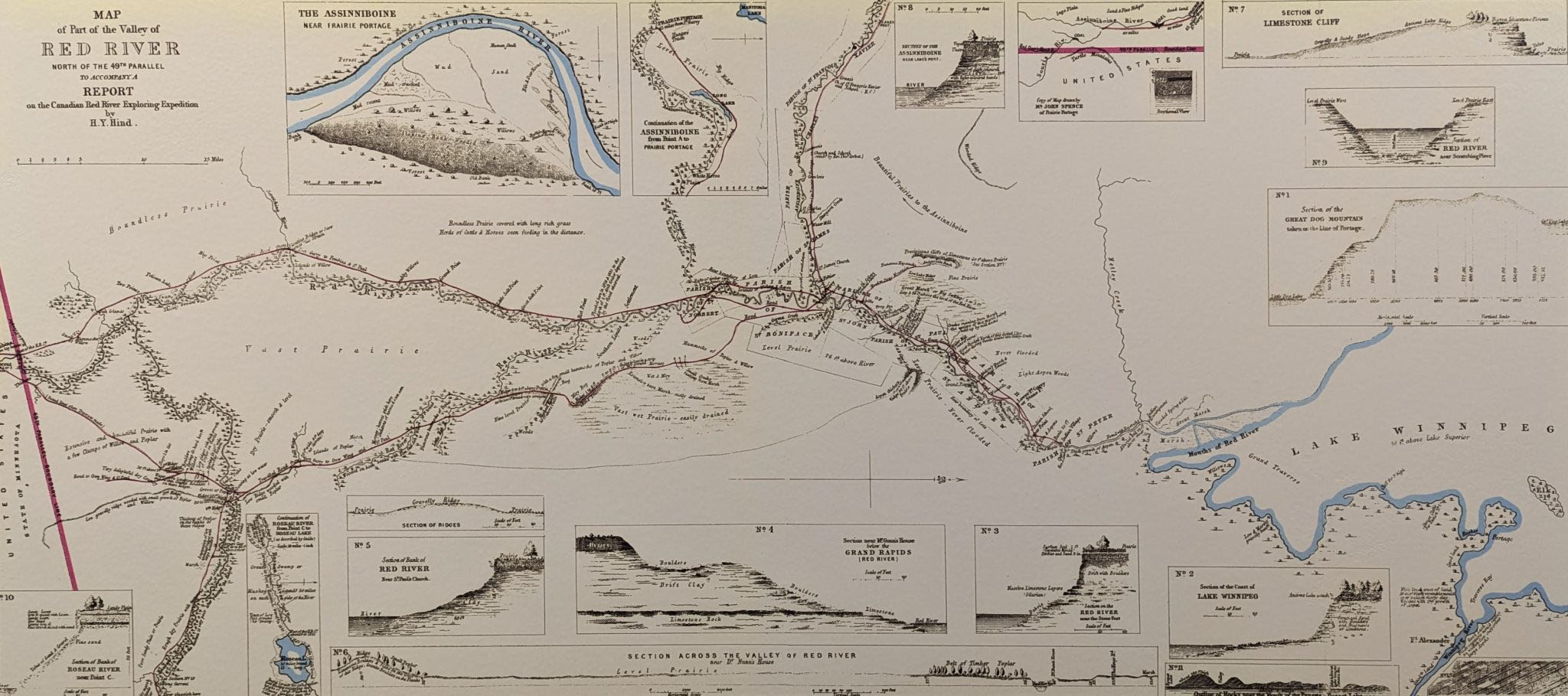
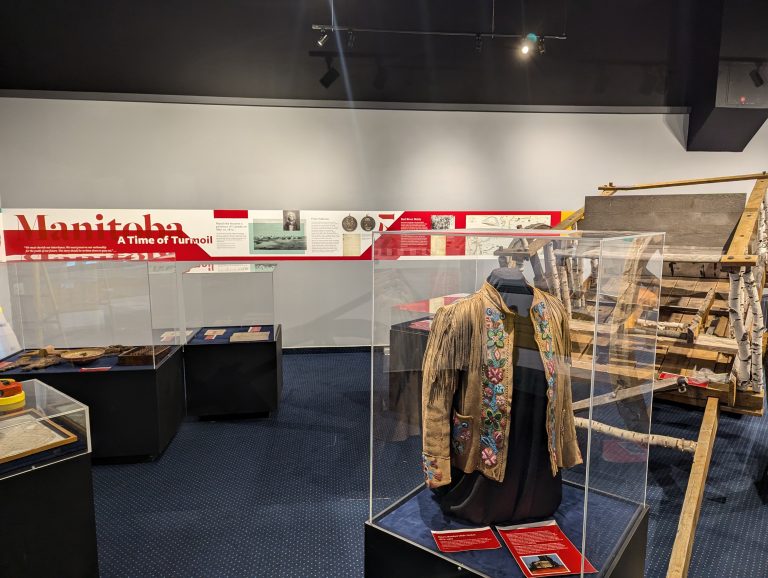
Mennonites first settled in Manitoba in 1874. They came to build a Mennonite society based on faith and farming. In doing so, they took part in the colonial process of the young nation of Canada. Their new home was on the ancestral lands of First Nations and the Red River Metis.
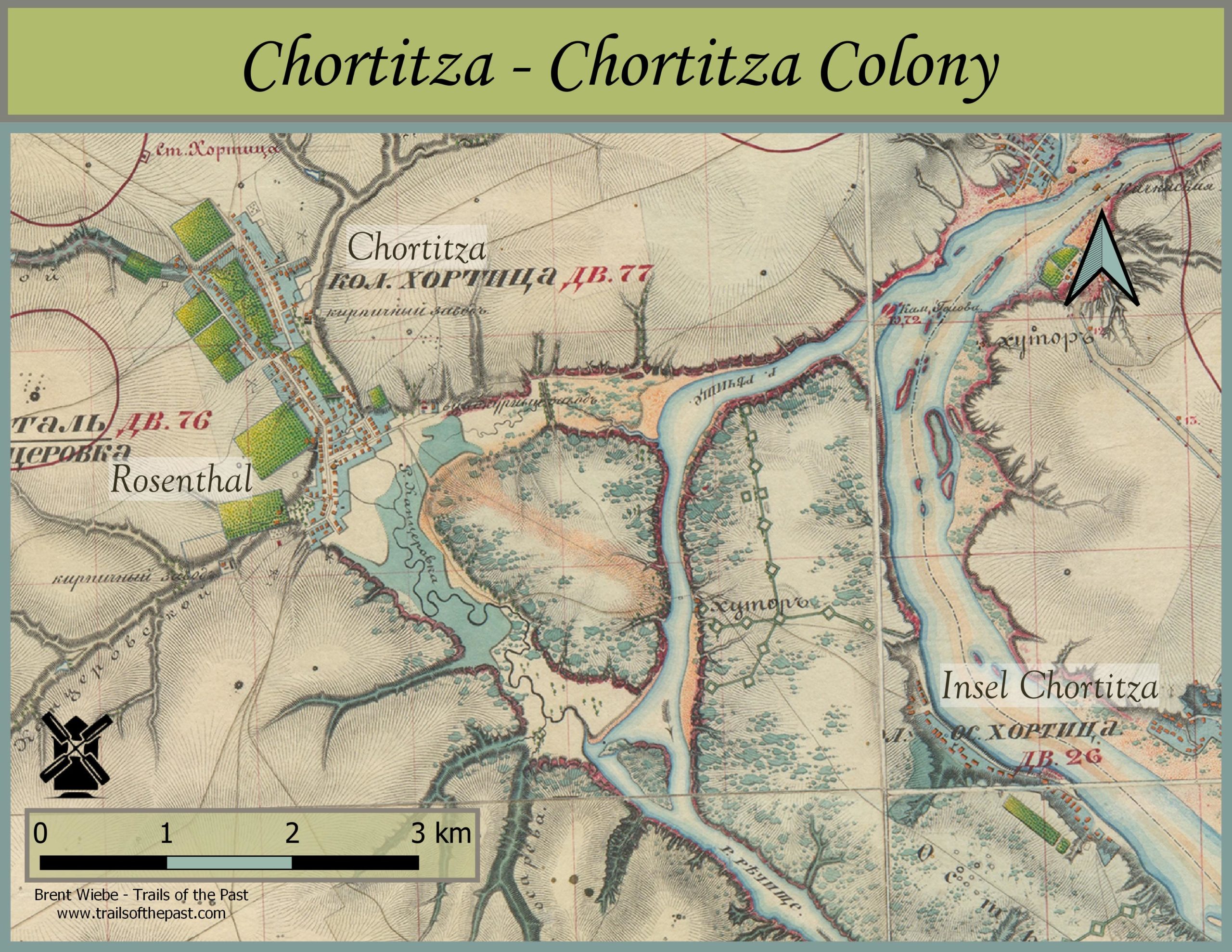
For centuries, Low-German Mennonites have moved to different countries to keep living according to their faith. In turn, beginning in the 1780s when Catherine the Great invited them to settle in newly conquered “South Russia” (now Ukraine), governments have offered Mennonites special privileges to settle in contested borderlands. This continues today in South America.
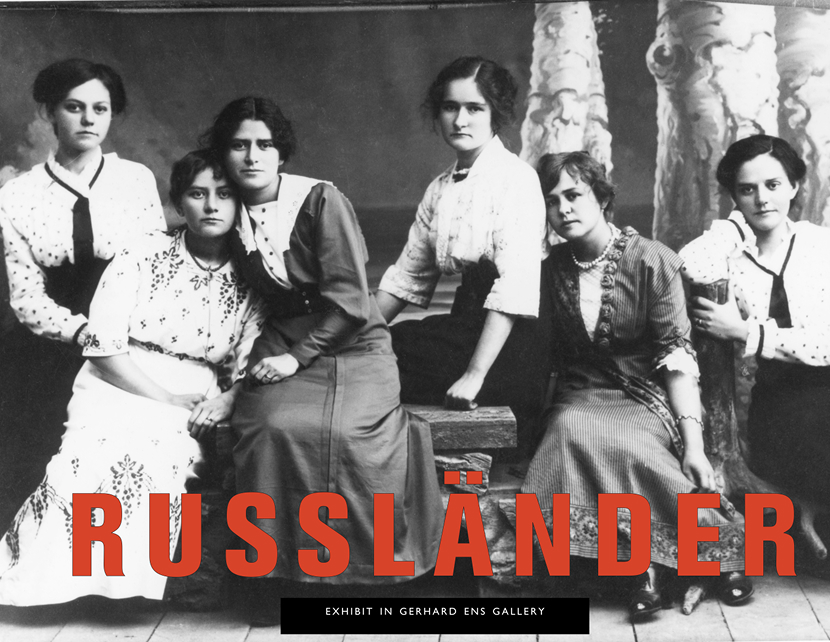
Although some Mennonites had become wealthy, about half owned little or no land. There was increasing pressure for Mennonites to assimilate as, in 1869, Russia began to enact the Great Reforms. By the 1870s. fearing they would lose their military service exemption and control over their German schools, the more traditionalist groups were ready to move again.
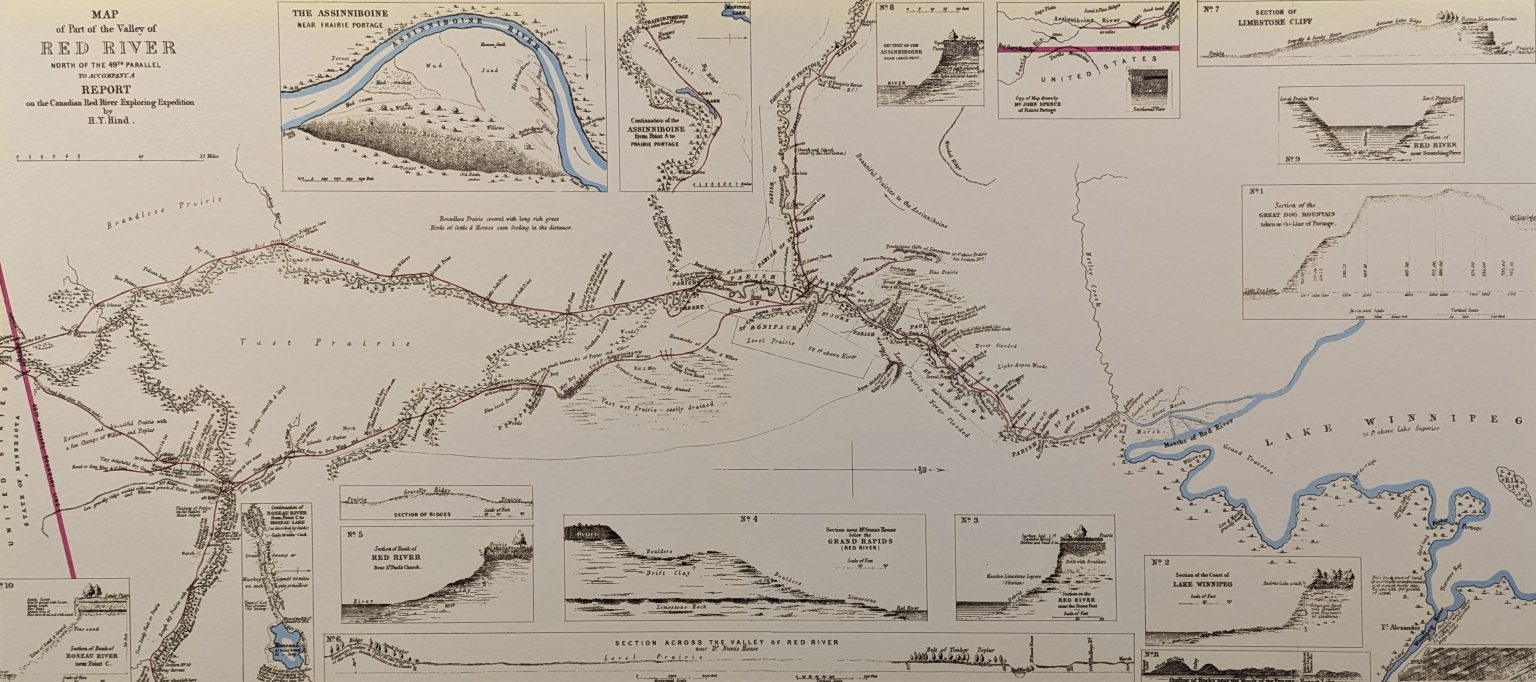
In 1873 Mennonites sent delegates to explore settlement options in the new province of Manitoba. From 1874-80 about a third of the Mennonites in Russia emigrated to America, with 7000 Kleine Gemeinde, Bergthalers and Old Colony settling in Manitoba.
First Nations
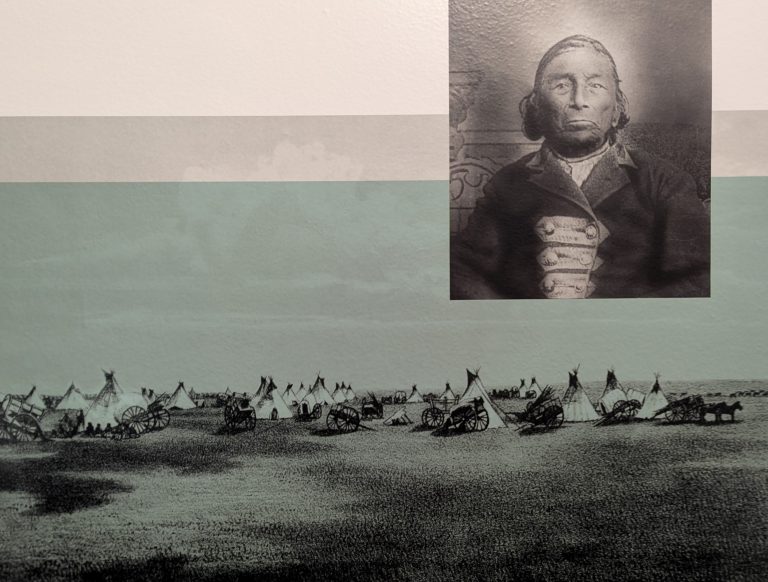
The lands settled by Mennonites were the ancestral lands of First Nations peoples. Before any settlement could take place, a Treaty between the sovereign peoples of the land and the Canadian Government needed to be made. Anishinaabe signatories representing Brokenhead, Sagkeeng, Long Plain, Peguis, Roseau River, Swan Lake, and Sandy Bay First Nations signed Treaty One, or “The Stone Fort Treaty”, in August 1871 at Lower Fort Garry. Three years later Mennonites arrived to homestead on parts of this land.
Many of the Treaty promises remain unfulfilled, and others were broken. The Indian Act of 1876, the Residential School catastrophe, the Sixties Scoop, and pervasive racism towards First Nations since the 1800s have created severe hardships and generational trauma for many people. First Nations continue to advocate for justice and sovereignty within Canada.
Red River Métis
Mennonite immigration was also possible because Louis Riel (1844-1885) forced the issue of Métis rights with the Federal government, resulting in the Manitoba Act of 1870. While the Manitoba Act ensured the rights of the Red River Métis people, these protections were never fully realized. After 1870, some members of the Wolseley expedition who arrived to “maintain order” terrorized Red River Métis citizens, who were often subjected to racism, abuse, and dispossession of their land. Many left Manitoba, while others downplayed their Red River Métis identities to avoid discrimination. Today there is a strong sense of identity and leadership among the Red River Métis, who are committed to self government.

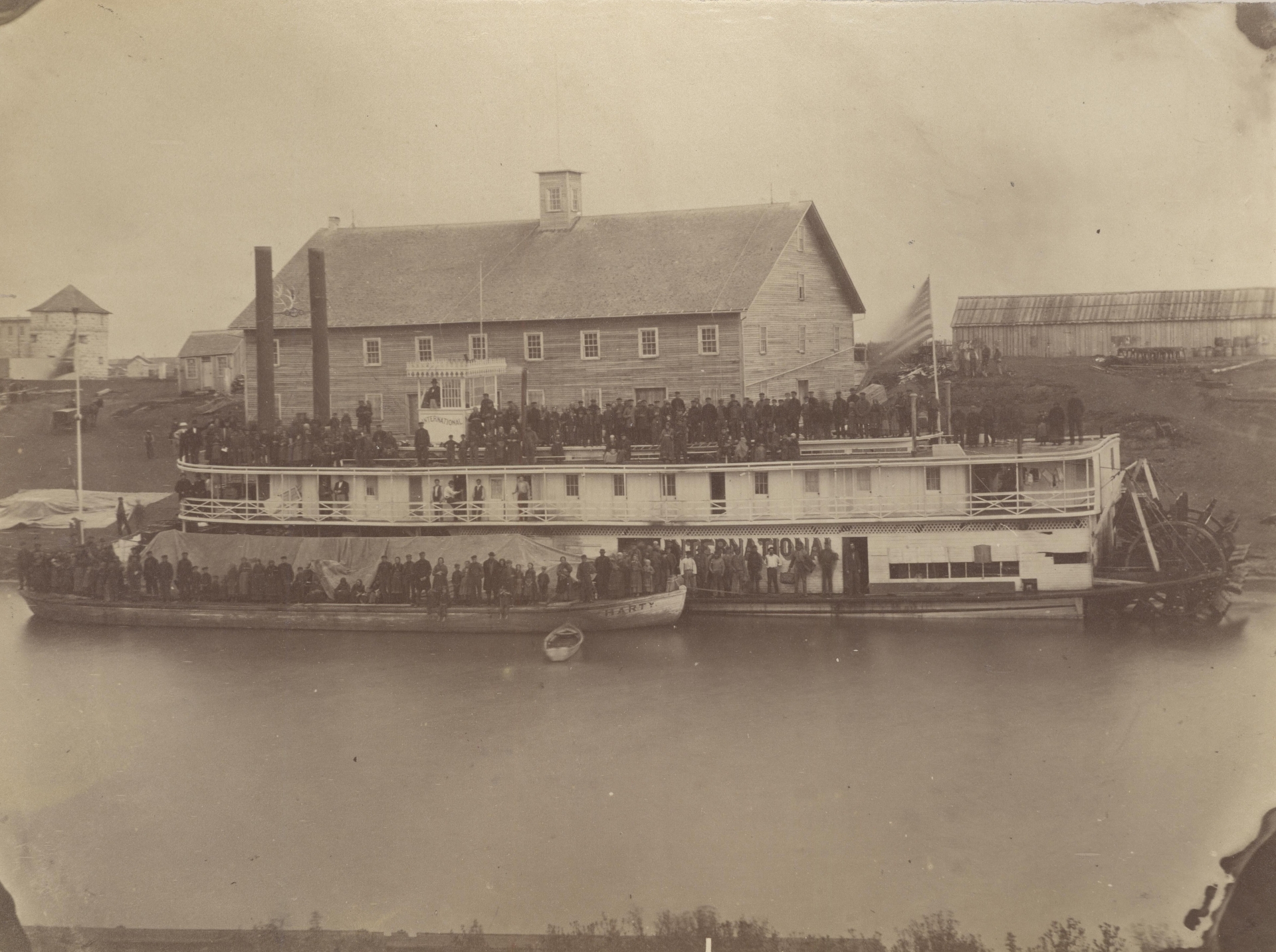
Mass migration to Manitoba in the 1870s was made possible by the latest technology: trains and steamboats. It only took about seven weeks for Mennonites to travel over 12,000 kilometres.
Mennonites could take a train from just outside their home colony in South Imperial Russia, now Ukraine, to Hamburg, Germany. From there, they took a boat to Hull in the UK, a train to Liverpool, and then an ocean steamer to Quebec. Here they took trains to Collingwood, a lake steamer to Duluth, a train to Moorhead, and a riverboat to Manitoba.
The trip was very expensive. Two parents, two teenagers, and one child under eight would cost around $220, roughly two years’ wages for a day-labourer in South Russia. When Mennonites in Ontario heard about the migration, they collected $20,000 to assist poor families, and borrowed a further $100,000 from the Canadian government. This Brotschuld, (“bread debt”), was paid back within twenty years.
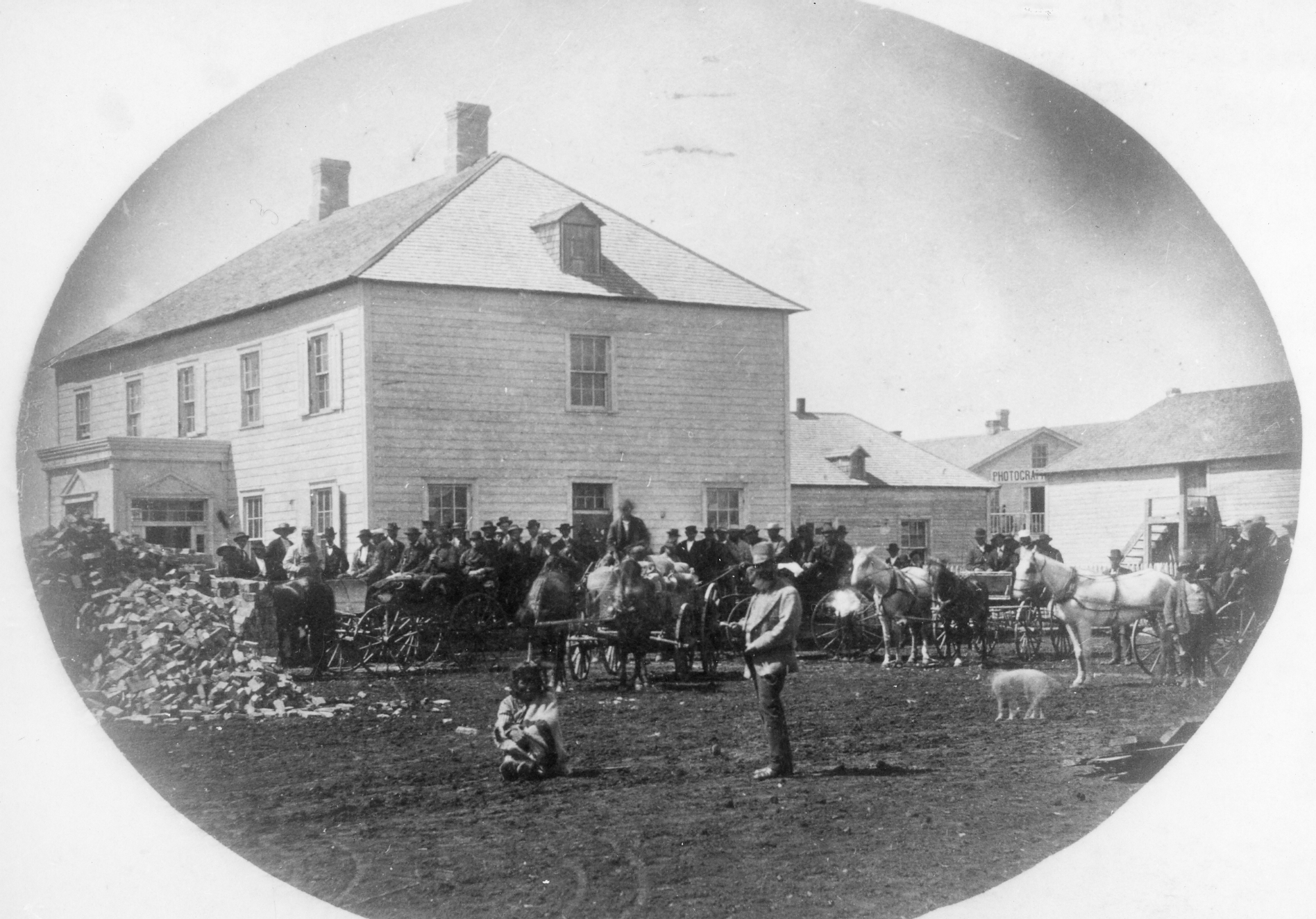
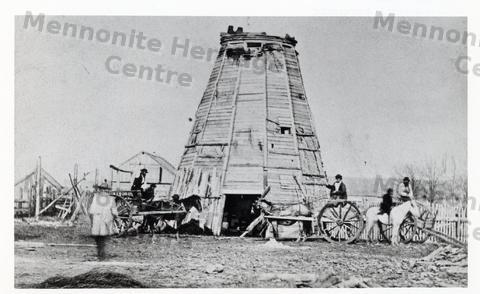
The first years were hard. Mennonites’ first winter in Manitoba remains the coldest on record. A grasshopper plague destroyed the crops in 1875, and excessive snow and rain over the next four years turned the best land on the East Reserve into a bog. About half the settlers abandoned their claims and moved to the West Reserve by 1883.

Mennonites believed that living in their own communities and keeping their own language would preserve their faith. Still, they benefited from the help of their neighbours as they began their new lives in Canada.They also received benefits many of their neighbours – especially Indigenous neighbours – did not.
Mennonites benefited from the Federal Government’s policy to colonise the Prairies with people of European descent. After Treaties were made, First Nations moved on to Reserves, where they suffered great cultural losses. People of Swan Lake First Nation and Roseau River First Nation often had contact with Mennonite settlers.
After 1870, many Red River Métis moved further west as their land rights were mishandled. The Red River Métis who remained had regular contact with Mennonite settlers, and they often worked together, but they did not have the same privileges. For one, Mennonites were allowed to settle in bloc settlements, where Red River Métis requests were ignored.
As immigration increased towards the end of the 19th century, Americans, French, and Eastern Europeans (among many others) became Mennonites’ neighbours in Manitoba. Settlers of British background held much of the political and economic power. Mennonites regularly imitated the English in their clothing, language, farming practices, and architecture, among many other habits.
“We frequently come into contact with the Métis… Everyone who has had business with them praises their hospitality. Indeed, you can take it, that truthfully, these people often put us to shame…”
– Letter by Cornelius Toews, dated December 13, 1874, Grünfeld MB (Pioneers and Pilgrims, Delbert Plett, 1990)